

 En
En  Fr
Fr Innovation / Fleet
Slate pickup truck will not be sold in Canada
Slate Auto is a Michigan-based American startup with a goal of producing a compact all-electric pickup truck priced below US$25,000. The venture is backed in part by Amazon founder Jeff Bezos and Mark Walter, owner of the Los Angeles Dodgers....
Slate pickup truck will not be sold in Canada
Slate Auto is a Michigan-based American startup with a ...

Airstream launches its most affordable trailer
American travel trailer manufacturer Airstream, known a...
What if renewable gasoline were the solution?
In Europe, BMW, Toyota, Bosch and Repsol are currently ...

Piero Facchin
Hits: 313
Lotus Eletre: Redefining performance for a new era
Piero Facchin
Hits: 313
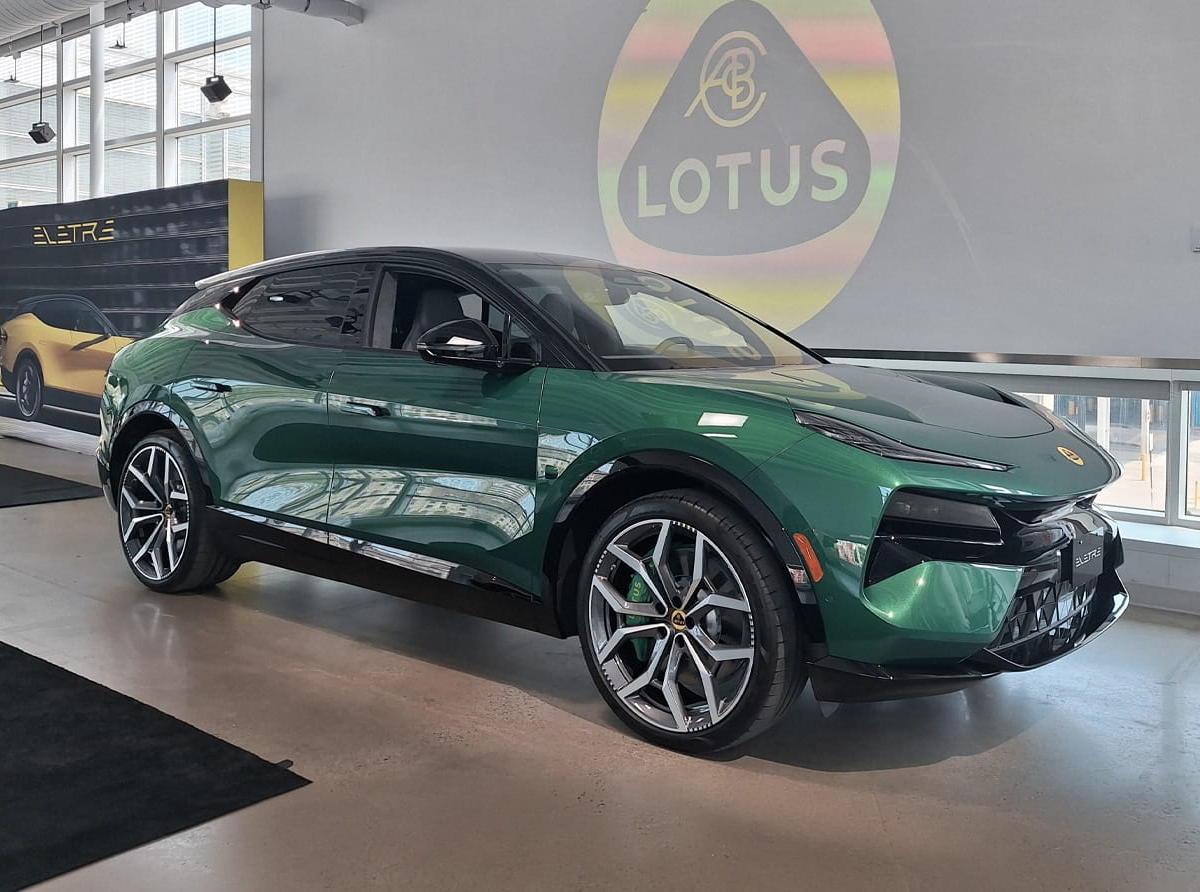
With the arrival of the Eletre, Lotus enters uncharted territory: a fully electric SUV that promises to remain faithful to the brand's legendary performance DNA. During an in-depth conversation, Massimiliano Trantini, CEO of Lotus Cars Americas, shares his vision of balance, innovation, and how this bold new model is poised to reshape Lotus' presence in the Canadian market.
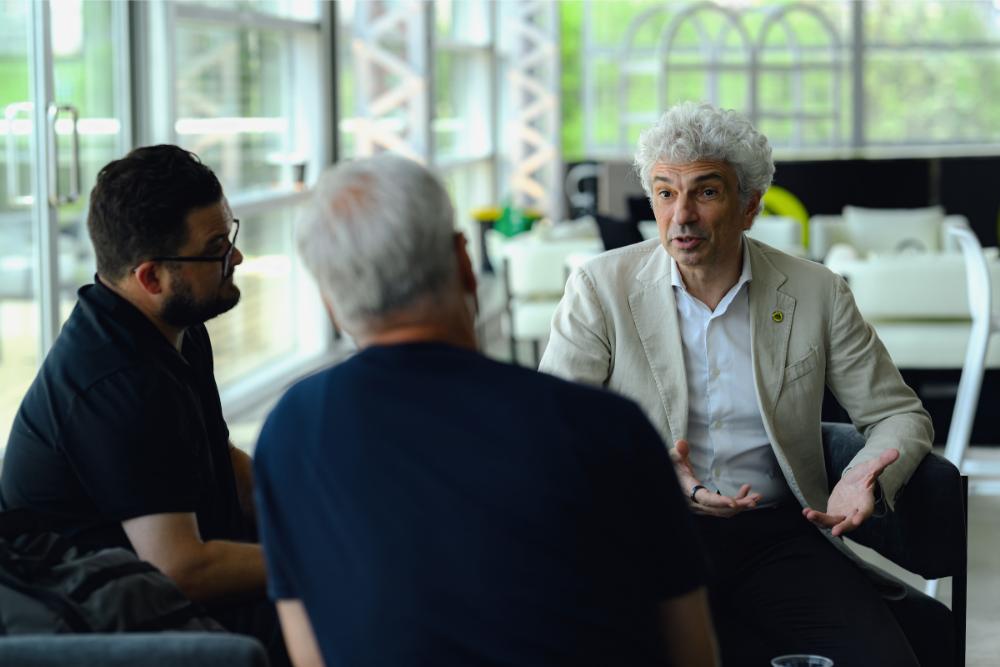
An exclusive conversation with Massimiliano Trantini on electrification, design, and the future of Lotus in Canada
A NEW LANGUAGE FOR LOTUS
P.F. How did the project of Eletre begin?
M.T. The design is deeply inspired by Lotus. It may look unconventional at first, but it is a true Lotus. Historically, our cars have been lightweight two-seaters, heavily influenced by Formula One; race cars adapted for the road.
With the Eletre, we've expanded that DNA into a completely new segment. It's a shift from pure sports car to a more lifestyle-oriented vehicle, but without losing our essence. The idea was to create a car that delivers the same performance, handling, braking, and steering precision you expect from Lotus—while allowing you to share the experience with your entire family.
It's about creating a cocoon around the driver. You can switch driving modes, head to the track, and still enjoy a refined, almost lounge-like atmosphere on the way home. I tested it at Circuit of the Americas and recorded over 1G of lateral acceleration in one of its toughest corners. Later, driving back, it felt incredibly comfortable, enhanced by the KEF sound system.
Ultimately, the key word is balance—balancing our core DNA with a new design language.
AERODYNAMICS AND DESIGN: FORM FOLLOWS FUNCTION
P.F. Can you speak about the many aero details around the vehicle?
M.T. As an engineer, I look at numbers, but I also appreciate the aesthetic dimension that you noted. With the Eletre, engineering and design are perfectly integrated; form truly follows function.
We use what we call “permeability,” allowing air to flow through the vehicle to optimize aerodynamics. This results in a drag coefficient of 0.26, which is exceptional for a vehicle of this size—numbers you'd typically expect from a sedan.
Again, it comes down to two principles: balance, and coherence with consistency. These are what define the driving experience and give the Eletre its unique character.
ENGINEERING COMFORT WITHOUT COMPROMISE
P.F. With the Eletre, is Lotus adapting to current market trends?
M.T. Lotus isn't simply adapting to market trends by building an EV; we're creating our own language. That's very much in line with Colin Chapman's pioneering spirit. If you look at Formula One, many of today's key innovations; downforce, lightweight construction, radiator positioning, all originated from his ideas.
We aim to anticipate trends, but more importantly, to define them. Sometimes that means taking risks. With the Eletre, I believe we've succeeded in establishing something truly new.
POSITIONING IN THE CANADIAN MARKET
M.T. The Canadian market is highly segmented. You have ultra-luxury SUVs above $160,000, and then the premium segment between $120,000 and $160,000.
We see the Eletre positioned in this premium space, offering what we believe is the best balance of value. Essentially, we deliver a luxury product at a premium price point.
COMPETITION AND A NEW CUSTOMER BASE
P.F. Who are your main rivals?
M.T. Porsche has always been a benchmark, particularly models in the Cayenne segment. The German manufacturers are doing an excellent job, but their design philosophy is very different from ours.
We're not trying to replicate what exists—we're creating our own identity. Traditionally, our customers in North America have been men over 50, often long-time enthusiasts.
With the Eletre, we're expanding that base. We're seeing more women and younger buyers—people looking for performance, but also versatility in their daily lives. This isn't about fitting into an existing segment; it's about creating a new niche.
The Eletre has a strong visual presence. It generates curiosity everywhere—it even caught the attention of police officers in Austin who stopped me just to ask about the car.
REBUILDING THE LOTUS BRAND
P.F. How do you intend to bring Lotus into the mainstream?
M.T. We're aware of the challenges. Lotus has gone through difficult financial periods, but with this new positioning, we're seeing renewed enthusiasm from our core fans—and strong interest from new customers.
Perception is shifting positively. I'll give you an example: during the Formula One weekend in Montreal, Emerson Fittipaldi asked to test the Eletre. He took it for the weekend with his son, an F2 driver—and his son didn't want to give it back. That says a lot.
DESIGN ROOTS AND FUTURE STRATEGY
P.F. Where is the Eletre designed?
M.T. It was designed at our headquarters in Coventry by Ben Payne, Vice-President of Design. He ensured the Eletre shares the same genetic code as our other models, like the Emira and the Eviya.
CUSTOMER EXPERIENCE OVER VOLUME
P.F. Do you have specific sales targets?
M.T. We focus on real customers and long-term relationships. I always tell my team: our relationship with the customer doesn't end when the car is sold—it begins there.
We also want our dealer network to be sustainable and profitable. Our philosophy is simple: we will always build one car fewer than the demand. That ensures exclusivity and customer satisfaction.
In Canada, we're building an ecosystem—a community of passionate owners who become ambassadors for the brand, sharing their experiences and helping us grow organically.
Conclusion
With the Eletre, Lotus is not merely entering the electric SUV segment—it is redefining it on its own terms. By blending performance heritage with modern versatility, the brand is carving out a distinct space in the Canadian market—one where emotion, innovation, and balance converge.
Galerie photo
(Photo credits: Lotus and Piero Facchin)

Piero Facchin


L'Automobile Magazine
News
Business Directory