

 En
En  Fr
Fr Innovation / Fleet
Lotus Eletre: Redefining performance for a new era
With the arrival of the Eletre, Lotus enters uncharted territory: a fully electric SUV that promises to remain faithful to the brand's legendary performance DNA. During an in-depth conversation, Massimiliano Trantini, CEO of Lotus Cars Americas, shares his vis...
Lotus Eletre: Redefining performance for a new era
With the arrival of the Eletre, Lotus enters uncharted ...
Toyota and Joby Aviation Partnership Gains Momentum
Toyota has been “flirting” with American company Joby A...
BMW Unveils Its New X5 SUV
German luxury automaker BMW has unveiled the 2027 versi...

Mathieu Brunel
Hits: 15
Test Drive: 2026 BYD Seal – The Chinese Electric Sedan Arrives in Canada
Mathieu Brunel
Hits: 15
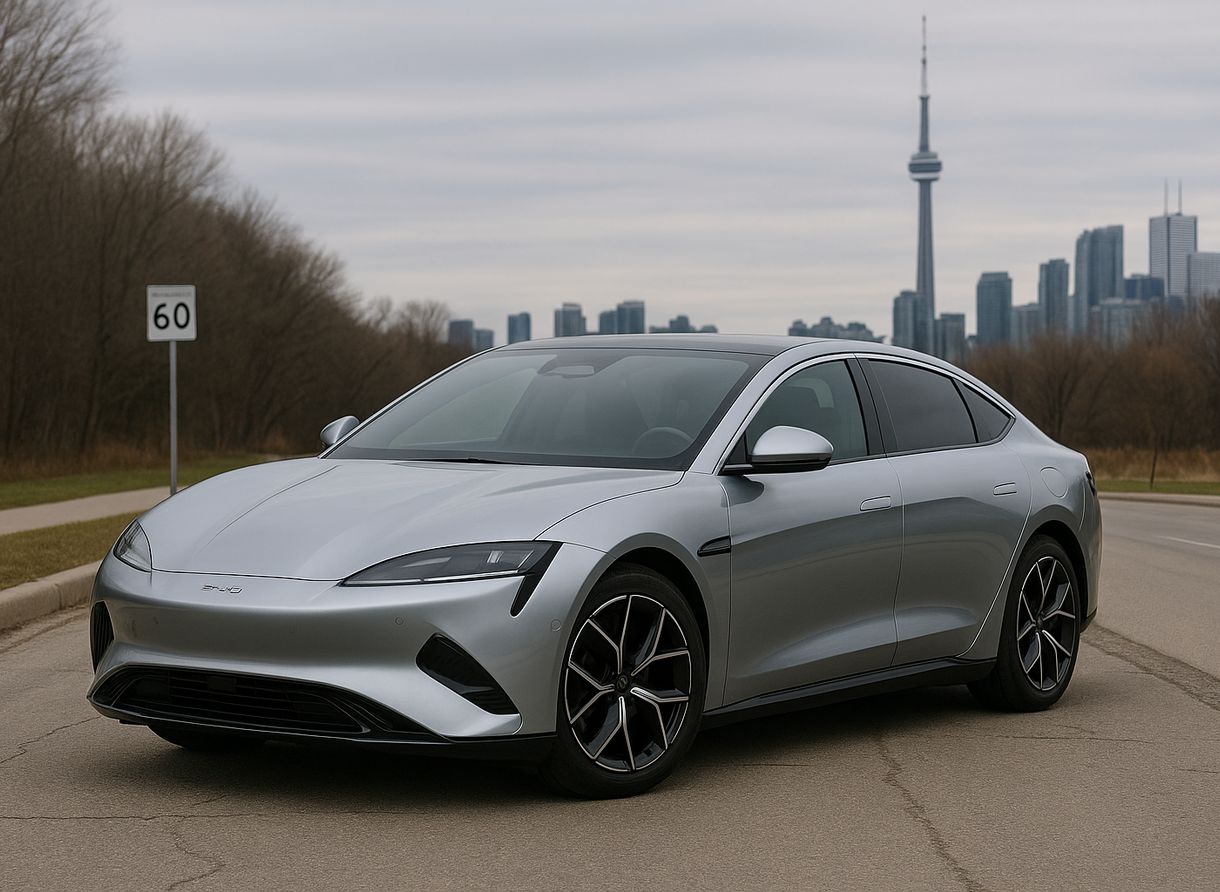
The 2026 BYD Seal signals the entry of a Chinese automaker into Canada’s electric vehicle market. Its design, performance, and technological features attract attention, while its pricing and on-road qualities generate both interest and caution. This road test highlights the strengths, limitations, and challenges presented by this sedan as the industry transitions towards electric mobility.
The 2026 BYD Seal: A Noteworthy Arrival in Canada
The arrival of the 2026 BYD Seal in Canada marks a significant milestone in the electric vehicle landscape. As the first model from the Chinese automaker to undergo a full road test by a Canadian media outlet, the Seal reflects a global trend toward diversifying electric offerings. The entry of a Chinese brand into the North American market raises questions about competitiveness, public perception, and the model’s ability to meet local expectations.
Design: A Blend of Distinction and Familiarity
The 2026 BYD Seal features a modern silhouette, defined by flowing lines and a strong identity. Its proportions, reminiscent of a sporty sedan, signal a clear intent to compete with premium electric vehicles already on the market. The front end, with its closed grille and sleek headlights, emphasizes the model’s dynamic character. Sculpted sides are designed to optimize aerodynamics, a key factor for range and energy efficiency.
At the rear, a full-width light signature adds a contemporary touch. The choice of materials and exterior build quality appear to meet segment standards, though only time will tell how well these elements age.
Interior and Technology: Fully Equipped
Inside, the 2026 BYD Seal puts technology front and centre. The cockpit is dominated by a large central touchscreen that consolidates most infotainment and vehicle management functions. The digital instrument cluster is customizable, and the integration of controls aims to minimize distractions.
Overall presentation is refined, with materials intended to rival those of established brands. Space is generous both front and rear, though the sloping roofline may compromise comfort for taller rear passengers. Storage options are plentiful, and the trunk offers a decent volume for an electric sedan, although some competitors make better use of the absence of a combustion engine to maximize cargo space.
Performance and Driving Experience
On the technical side, the 2026 BYD Seal is built on a modern architecture typical of recent electric vehicles. Its powertrain delivers instant torque and smooth acceleration. Initial tests suggest balanced handling, thanks to a low centre of gravity provided by the battery mounted under the floor. Steering is precise, and the suspension aims for a balance between sporty dynamics and comfort over rough surfaces.
The claimed range—while to be taken cautiously in the North American context—is competitive for its segment. Charging times, which vary depending on the charging station, are in line with current standards for this type of vehicle. However, the consistency of these performances over time and in winter conditions—a key concern for Canadian buyers—remains to be seen.
Positioning in the North American Market
The launch of the 2026 BYD Seal comes as Canadian interest in electric vehicles continues to grow. The market is already well established, with North American, European, and Asian automakers all competing. BYD is betting on an aggressive equipment-to-price ratio and generous technology offerings, even in base models, to stand out.
A major challenge for the brand will be building trust around reliability and after-sales service—two crucial factors when choosing a new vehicle, especially from a brand still relatively unknown in Canada. Perceptions of Chinese cars are evolving, but caution remains, particularly regarding durability and adaptation to Canada’s climate and road network.
Challenges and Perspectives for Electric Mobility
The arrival of the 2026 BYD Seal coincides with an accelerating shift toward electric mobility. Governments and industry are encouraging broader adoption, and a growing range of options is intensifying both technological and price competition. In this context, the Seal could help democratize access to well-equipped electric vehicles and push established brands to adjust their strategies.
Challenges remain, especially regarding charging infrastructure, technician training, and battery lifecycle management. BYD’s long-term success will also depend on its ability to reassure consumers on these points and deliver a customer experience that meets expectations.
Conclusion
The 2026 BYD Seal represents a turning point for the Canadian automotive industry, marking the arrival of a Chinese automaker in a rapidly evolving segment. Its bold design, technological features, and performance make it a model to watch. The key question is how well it will adapt to North American realities and meet the expectations of a demanding clientele. Its success will depend as much on its intrinsic qualities as on the trust it can build with Canadian buyers.

Mathieu Brunel

L'Automobile Magazine
News
Business Directory